- 7 juices + 3 shots per day, cold-pressed¹
Free shipping
Your cart
Your cart is empty
Nothing here yet? Start with our bestseller.
Free shipping
Or choose a different length:
incl. VAT. plus shipping & deposit
¹ Preserved by HPP (high pressure processing): the filled bottle is exposed to high pressure without heating.

Language



Lemons are among the little all-rounders of mindful nutrition: According to the German Federal Food Code, they provide vitamin C, flavonoids, as well as potassium, magnesium, and calcium.
At LiveFresh, we harness the power of the lemon to enhance drinks, shots, and bowls with fresh, light flavors and practical benefits for everyday life—all packaged in recycled PET bottles or sustainable bowl containers.
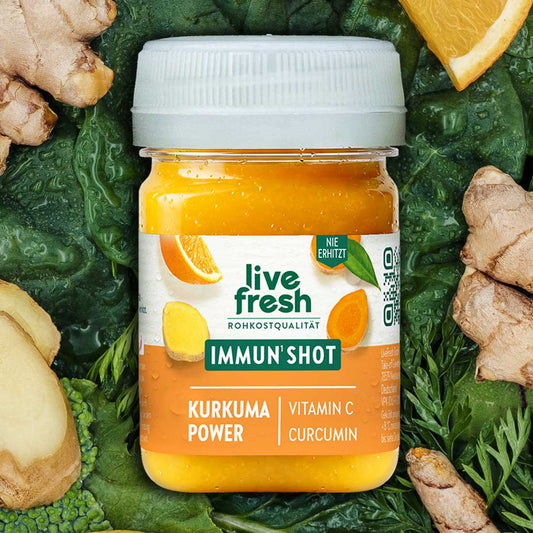
Whether it’s Happy Lemon organic infused water, the turmeric-ginger shot, or the vegan turmeric curry bowl—here, natural lemon freshness meets modern, plant-based power.
The lemon has come a long way: It originally hails from Southeast Asia and made its way to the Mediterranean via ancient trade routes. There, it became an integral part of European cuisine and later a symbol of freshness, flavor, and natural balance.
Today, you’ll find lemons not only in beverages but also in bowls, dressings, and functional juices. At LiveFresh, it stands for naturalness and a mindful lifestyle.
Each variety has its own character, and LiveFresh uses exactly that to perfectly balance flavor and freshness.
Lemons provide valuable vitamins, minerals, and plant compounds that can enrich your daily life.
Typical nutrients per 100 g:
You benefit from freshness, flavor, and ease of use in everyday life—without artificial additives or hidden sugars.
Whether in your morning water, in a salad dressing at lunchtime, or as part of a functional drink—lemon is the fresh moment in your day.
You can use it on its own or enjoy it as an ingredient in modern products from LiveFresh, such as:
Lemon plays a central role in modern functional drinks and bowls, providing freshness, flavor, and balance. At LiveFresh, you’ll find it in many innovative combinations:
Lemon also perfectly complements the natural sweetness of apples in cold-pressed juices or the 3-liter juice box.
Much of the nutritional value is preserved, but dietary fiber is primarily found in the pulp. When juicing, the solid parts of the fruit end up in the pulp. Many vitamins and minerals end up in the juice, but dietary fiber tends not to. This is normal for citrus fruits and is well documented in the NIH Review 2025.
Lemons naturally contain vitamin C. Analyses show that lemons contain approximately 50 milligrams per 100 grams of fruit. The exact amount varies depending on the variety and storage conditions (NIH Meta-Analysis 2024).
Lemons provide minerals and plant-based compounds, including potassium, magnesium, calcium, and phosphorus. The pulp also contains flavonoids, essential oils that give lemons their characteristic aroma, as well as pectin and citrates. This composition is listed in official nutritional data (Federal Food Code 2024).
It can contribute to meeting your needs, though the exact amount depends on how it’s prepared and the portion size. The reference values from the German Nutrition Society (DGE) can help you gauge this. It recommends a daily intake for adults ranging from about 95 to 110 milligrams. How much you consume through a lemon-flavored drink depends heavily on the amount of fruit and juice used (DGE 2024). If you have specific questions, it’s best to consult a nutritionist or doctor.
Yes, most of the nutrients are preserved. Only the dietary fiber is found primarily in the pulp.
In water, as an ingredient in shots, juices, or bowls—whatever suits your taste.